Fire-door checks
Five signs a fire door needs attention
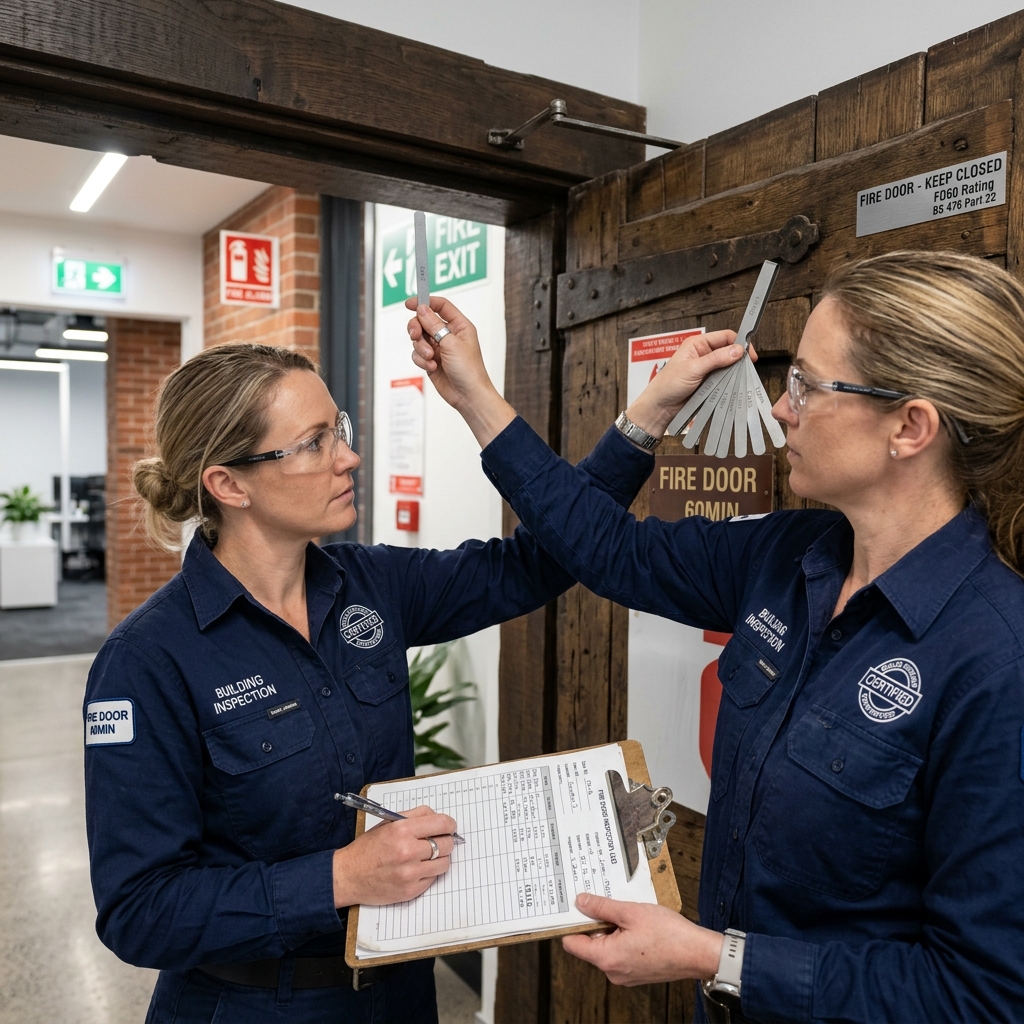
A routine check is not a substitute for a competent inspection, but it can identify obvious defects before they undermine the door's role in containing fire and smoke.
1. The door does not close fully
Release it from different opening angles. A self-closing fire door should close into its frame and overcome the latch or floor resistance. Do not disconnect the closer or wedge the door open.
2. The door, frame or glazing is damaged
Look for holes, splits, loose components and damaged glazing. Report defects promptly and use a competent person where repair or replacement is required.
3. Gaps appear excessive or uneven
Large or inconsistent gaps can affect fire and smoke performance. The correct limits depend on the door and evidence supporting it, so uncertain cases need competent assessment.
4. Strips or seals are damaged
Where intumescent strips or smoke seals are fitted, check that they remain present and undamaged. Their absence does not automatically prove that an older door is unsuitable.
5. The door has been altered
New letterboxes, locks, access-control equipment, glazing or penetrations can affect performance. Confirm that alterations are suitable for the door and correctly installed.
For blocks of flats in England over 11 metres, specific quarterly communal-door and annual flat-entrance-door checking duties apply. Other premises still need suitable maintenance under the Fire Safety Order.
Request a fire-door inspection